Wildfire Propagation Simulation
DESCRIPTION
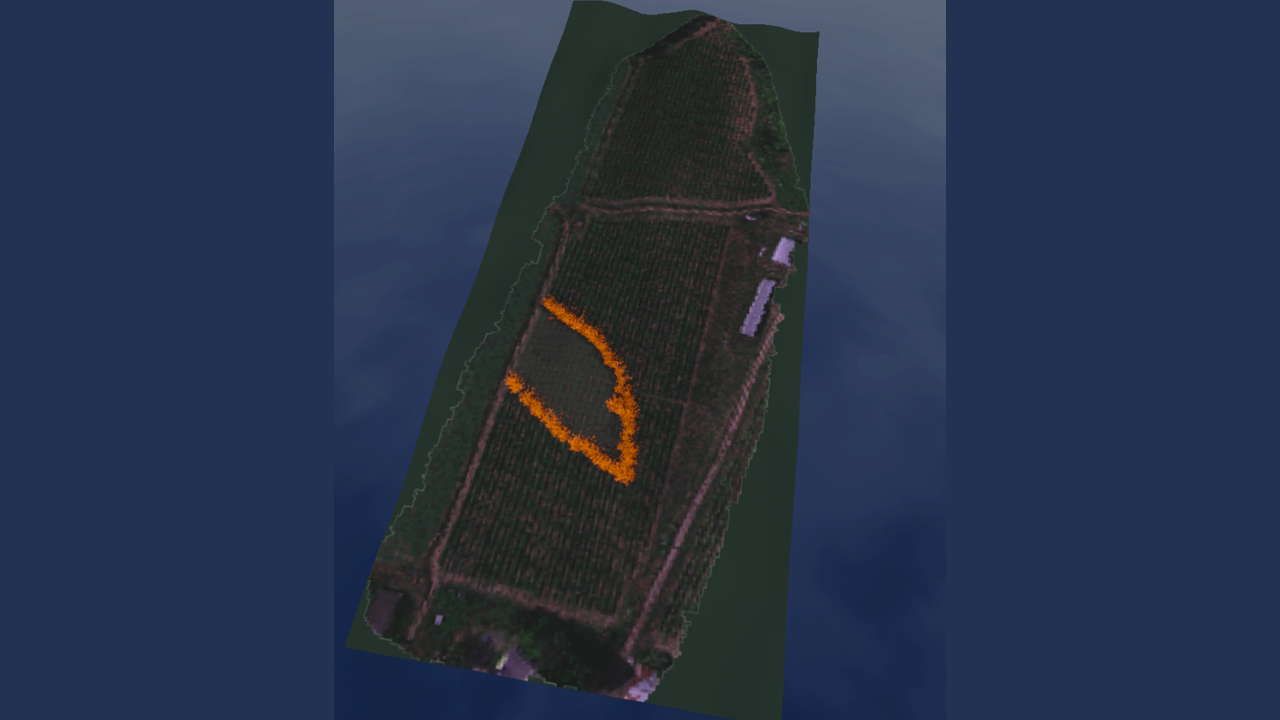
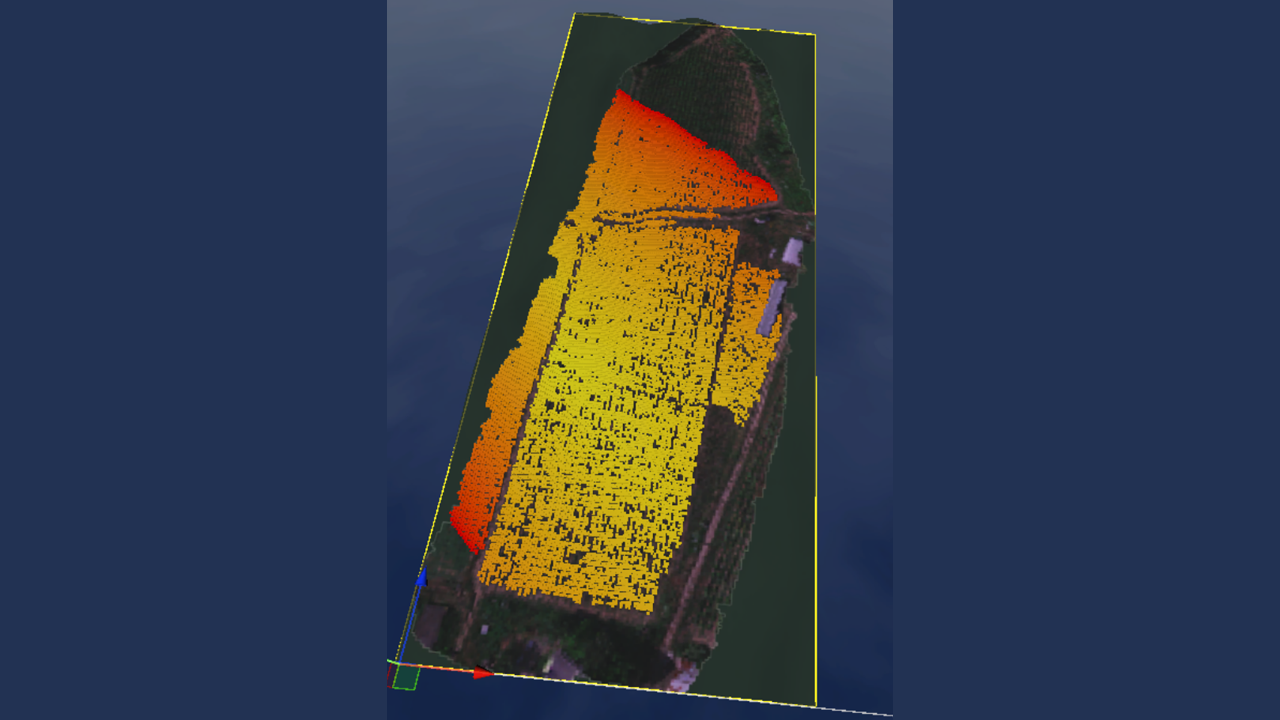
A real-time wildfire propagation visualization system built in Unity 6, developed during a research internship at Universidade Lusófona. The system recreates historical fire events using real-world geospatial and meteorological data, visualizing the complete fire lifecycle from ignition through burning to extinction and ash residue on a 3D terrain generated from actual elevation data and satellite imagery.
SCREENSHOTS
MY ROLE & CONTRIBUTION
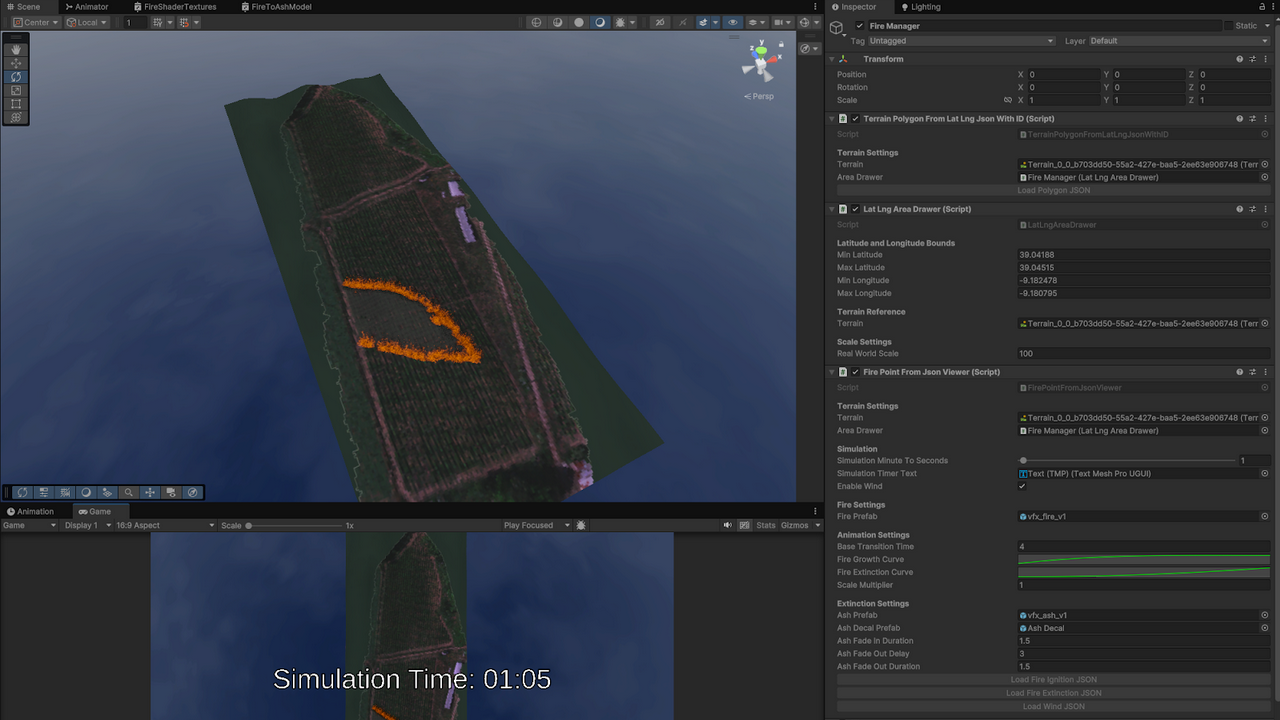
I was responsible for the full technical implementation of the simulation system. I developed the coordinate transformation system that converts real-world geographic coordinates into Unity world positions using geodetic formulas, built the data-driven fire event management system that processes thousands of ignition and extinction events with precise temporal control, and implemented the wind data integration pipeline that applies real meteorological data dynamically to the particle systems. I also designed the complete VFX Graph visualization pipeline including separate GPU-accelerated particle systems for flames, smoke, and ashes, a custom dissolve shader, decal projectors for persistent burn marks, and a four-phase fire lifecycle with smooth animated transitions. Throughout development I conducted multiple experimental iterations including cellular automata fire spread, shader-based transitions, and Perlin noise terrain generation before converging on the final architecture based on weekly supervisor feedback.
CORE CONCEPTS
This project explores real-time geospatial data visualization, GPU-accelerated particle simulation, and data-driven temporal event systems within a game engine environment. A key insight from the development process was the importance of temporal precision over algorithmic simulation for scientific visualization: data-driven replay of historical events proved more valuable than procedural fire spread models.
TECHNICAL ASPECTS
Developed in Unity 6 using VFX Graph, Shader Graph, and C#. Fire events are loaded from JSON files containing precise ignition and extinction timestamps and geographic coordinates for thousands of individual fire points. An object pooling system keeps memory allocation near-zero during steady state, with GPU profiling confirming stable rendering performance throughout the simulation.
PLATFORM: PC (Windows) / Unity 6
DEVELOPMENT TIME: ~3 Months
TEAM SIZE: 1 developer
TECHNOLOGIES USED: