Frogger of the Maracas
DESCRIPTION
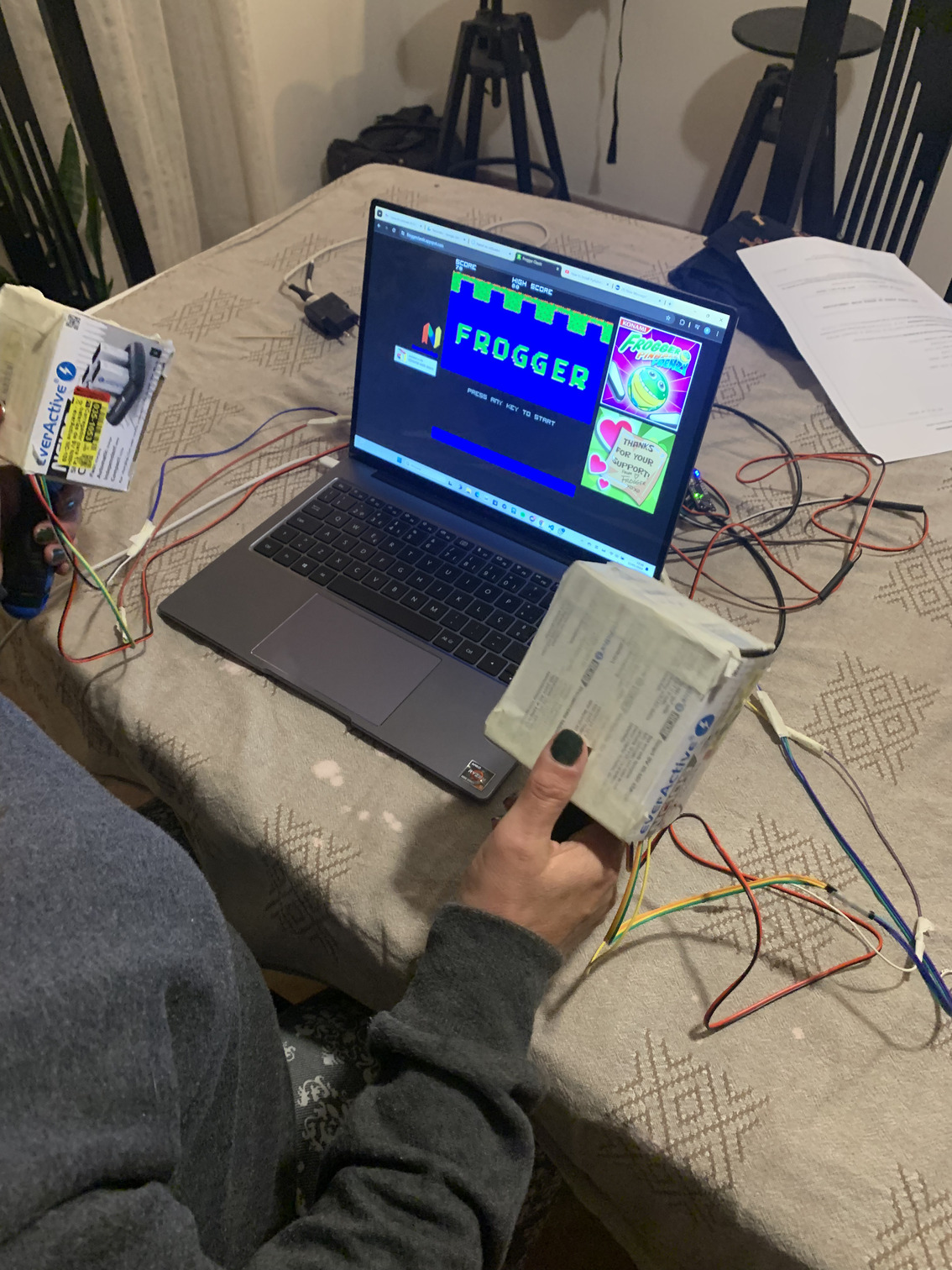
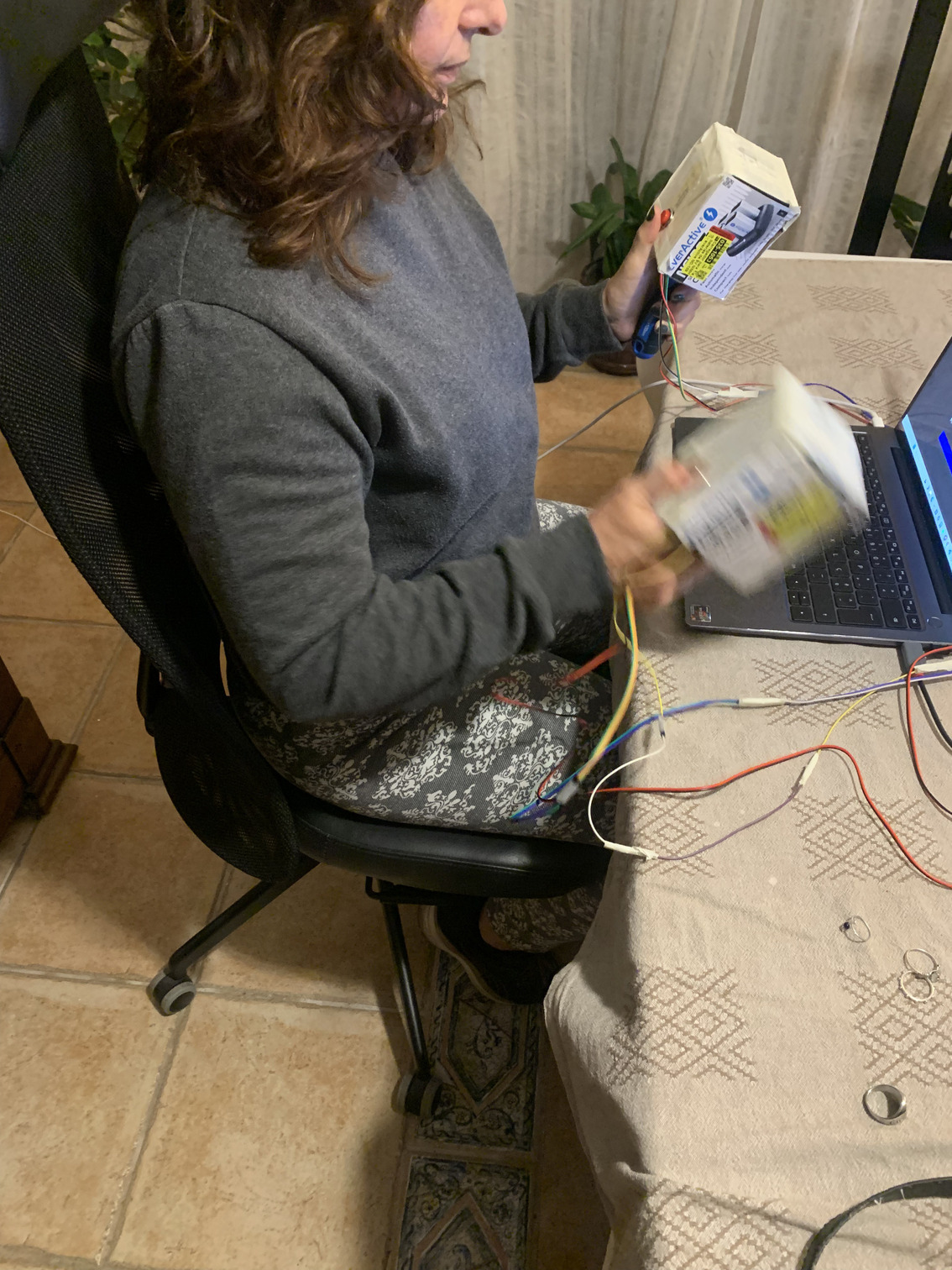
The "Frogger das Maracas" project was developed as part of the UX Design for Digital Games course in the Video Games degree at Universidade Lusófona, with the goal of transforming the experience of a classic game into a more physical and engaging challenge. Using maracas as alternative controls, we aimed to promote a gaming experience that combines physical activity and interactivity.
SCREENSHOTS
MY ROLE & CONTRIBUTION
I developed the core programming systems and conceptualized the project idea. My responsibilities included programming the Arduino Nano code to process motion sensor and button inputs, creating the Python script that translates physical actions into keyboard inputs for the online Frogger game, and designing the overall concept of using maracas as alternative game controllers. I also handled the hardware assembly including wiring motion sensors, buttons, and the DFRobot module expansion, and contributed to the physical construction of the maraca controllers using cardboard and reinforcement materials.
CORE CONCEPTS
This project applies principles of tangible interface design, alternative controller development, and physical engagement in digital games. It explores player experience through active interaction, combining movement-based input with real-time digital feedback. The system integrates concepts from UX design, electronics, and programming to enhance immersion and promote physical activity during gameplay.
TECHNICAL ASPECTS
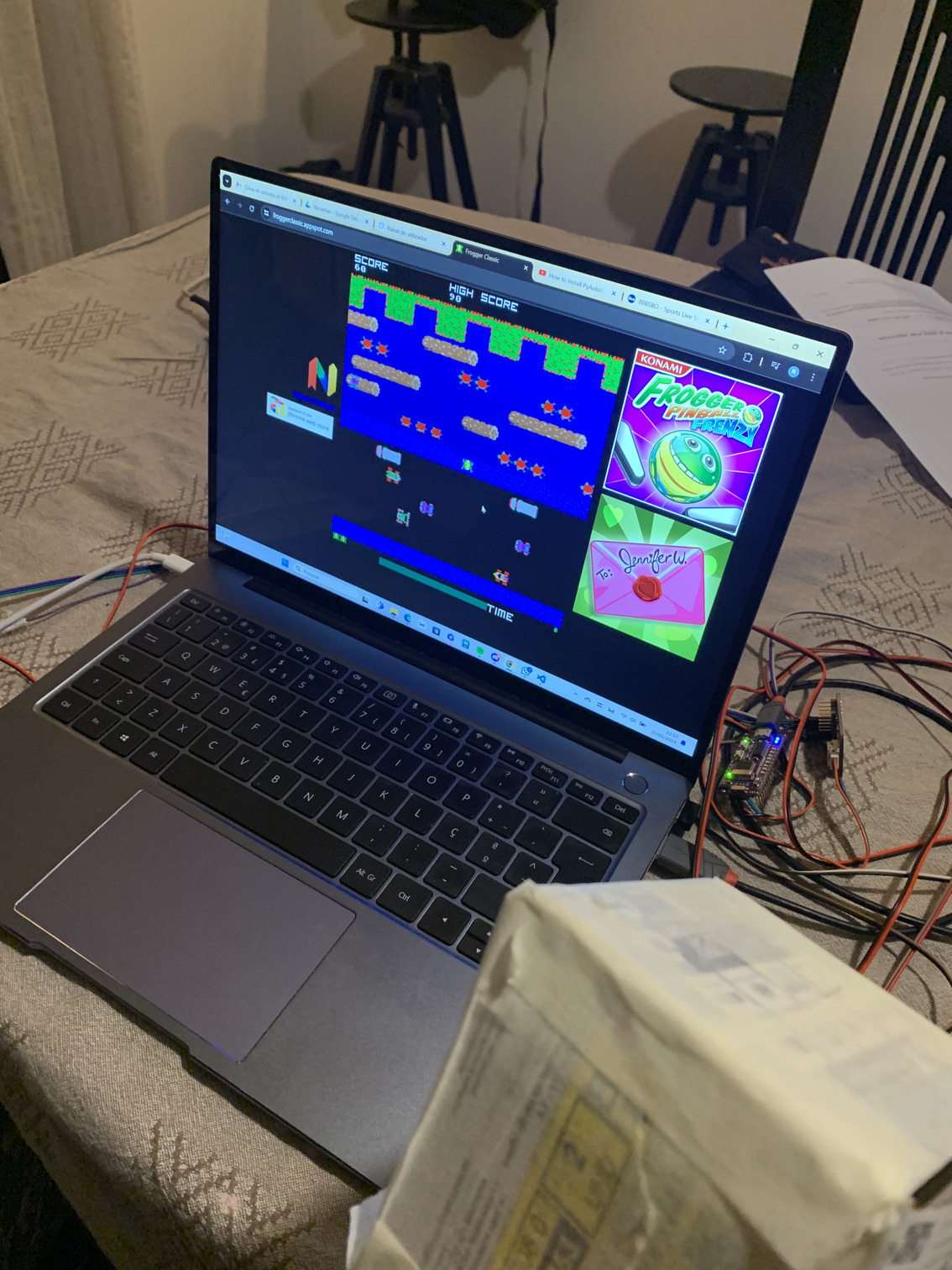
Frogger of the Maracas was developed using an Arduino Nano microcontroller combined with motion sensors and buttons to create a tangible input system. Movement data is processed by the Arduino and sent to a Python script, which translates physical actions into keyboard inputs for an online Frogger game. The maracas were built using cardboard structures reinforced with screwdrivers, duct tape, and hot glue to ensure stability during gameplay. A DFRobot module was used to expand the available input ports.
COURSE: "UX Design for Digital Games" – Bachelor in Videogames, Universidade Lusófona (2º year, 2º semester)
PLATFORM: PC (Windows) using custom Arduino-based hardware and an online browser game
DEVELOPMENT TIME: ~1 Month
TEAM SIZE: 2 developers
TECHNOLOGIES USED: